
SEO & visibility
Why modern browsers block third-party cookies (and what your team should do next)
- Privacy
- Analytics
- Marketing
- Web strategy
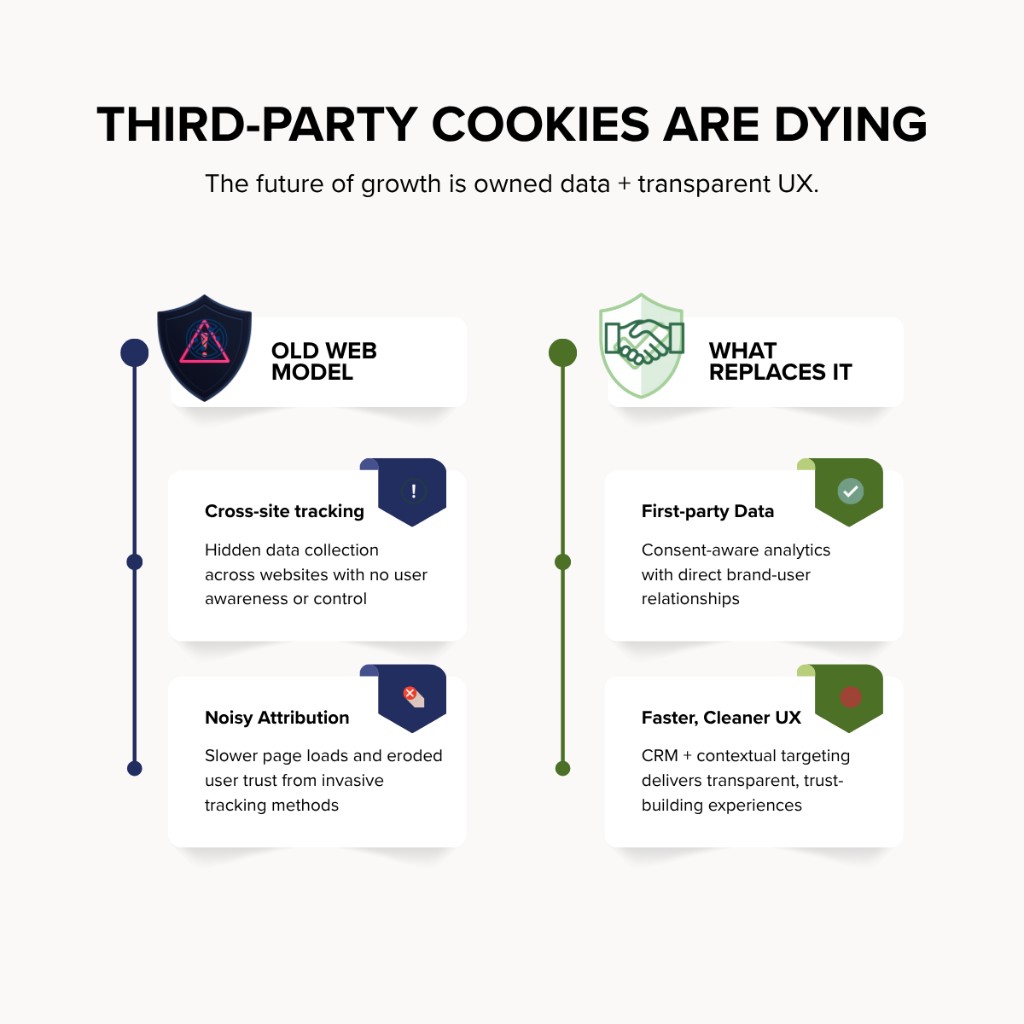
Third-party cookies were built for ad targeting and cross-site tracking in an earlier web era. They let one domain follow users across many other websites, often without clear consent or understanding.
Modern browsers are blocking them because that model no longer matches user expectations, privacy regulation pressure, or platform trust goals.
What changed in the browser market
Safari and Firefox moved early by restricting third-party tracking cookies years ago. Chrome followed with its own phase-out roadmap, which made cookieless planning a mainstream requirement instead of a niche concern.
- People expect control over personal data and dislike invisible tracking between unrelated sites.
- Regulators increasingly enforce consent and data-minimization rules.
- Browser vendors now compete on privacy and user trust, not only speed and features.
- Third-party scripts and trackers can also add page weight and performance overhead.
What this means for marketing and analytics teams
If your acquisition model depends on third-party audience pools, attribution and remarketing will feel noisier. But this is not the end of measurement—it is a shift toward cleaner data you actually own.
- Strengthen first-party data capture with clear value exchange (newsletters, member content, tools).
- Improve server-side and consent-aware analytics implementation.
- Use contextual targeting, CRM audiences, and modeled reporting instead of brittle cross-site tracking.
- Audit tags regularly to remove redundant vendors and reduce legal and performance risk.
The strategic upside is bigger than compliance: when tracking is clearer and data is first-party, teams usually gain better signal quality, faster sites, and higher customer trust.
Third-party cookies are fading, but effective digital growth is not. The winners are teams that redesign measurement and personalization around consent, first-party relationships, and transparent UX.