
Agence marketing B2B
Meridian Digital
Landings de campagne comme système—pas des one-offs
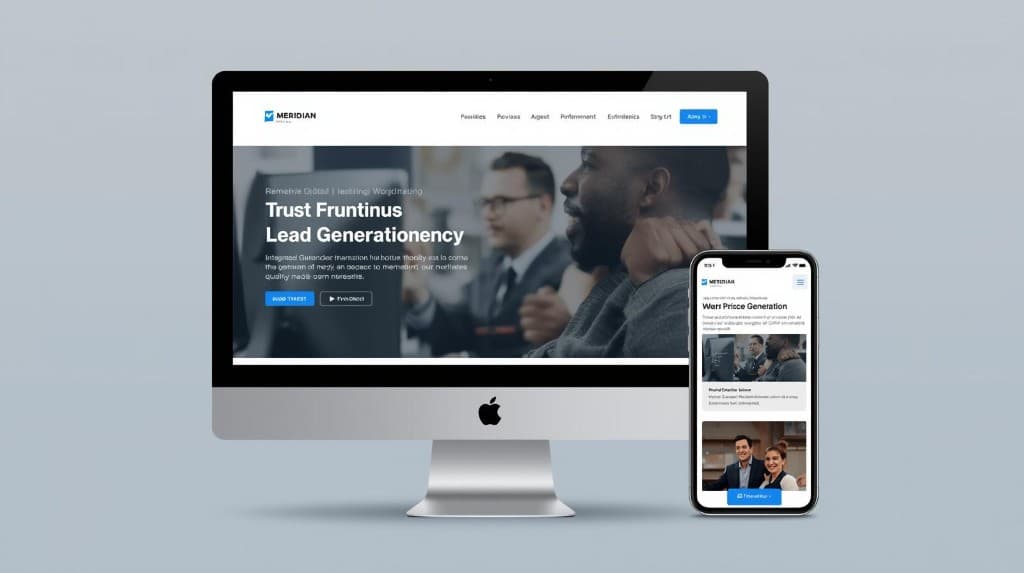
Après le lancement du site cœur, l’équipe paid de Meridian avait besoin de vélocité : nouvelles offres chaque semaine, discipline UTM stricte et zéro régression quand un titre change. Le goulot n’était pas le copy—ce sont des layouts inconsistants qui cassaient le mobile et biaisaient les comparaisons de conversion.
Contexte
Each experiment needed comparable structure so results were interpretable. Ad-hoc page builders introduced spacing drift and accidental duplicate H1s.
Stakeholders wanted a shared QA ritual before spend went live—something lighter than a ticket storm but heavier than ‘looks fine on my laptop.’
Contraintes
Reuse the existing CMS and hosting footprint—no parallel stack for landings.
Preserve brand typography while keeping CLS near zero when fonts load.
Recherche
We sampled the last twelve landings and tagged failure modes: hero CTA below fold on small phones, forms with uneven field spacing, and third-party scripts firing before consent.
Media buyers provided their review checklist; we mirrored it in a one-page QA doc tied to each publish.
Approche
We defined three landing archetypes—lead capture, webinar, and content upgrade—each with locked vertical rhythm and CTA placement. Variants swap copy and imagery inside rails, not outside them.
Preview links use the same caching behavior as production so stakeholders don’t approve a fast page that ships slow.
Livraison
A lightweight changelog accompanies each launch: hypothesis, audience, primary KPI, and date—so retrospectives don’t rely on memory.
Automated smoke tests cover form posts to a staging endpoint before go-live.
Résultats (indicatifs)
Time-to-publish for a net-new landing stabilized; fewer rollbacks after mobile checks became mandatory.
Experiment readouts became cleaner because page structure stopped confounding creative tests.
Stack & integrations
- CMS block library
- Staging parity
- Tag Manager governance
- Webhook staging