
Business & growth
AI agents made web dev fun again. That might be the warning sign.
- Web development
- AI
- Engineering
- Career
- Agents
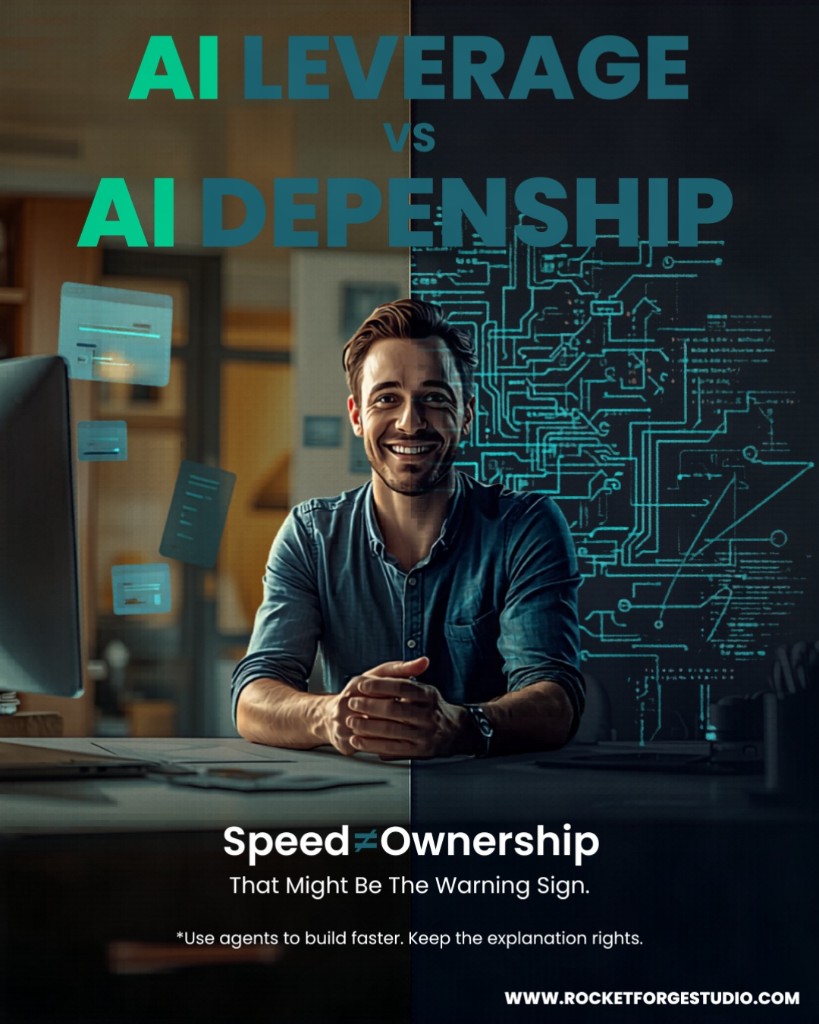
AI agents made web development fun for me again. I am not sure that is only a good thing.
Last month I shipped a client landing page in an afternoon. Layout variants, boilerplate, repetitive copy tweaks—the work that used to drain the day disappeared. For a few hours it felt like the best part of the job came back: ideas moving to screen without friction.
Then auth behaved oddly in staging.
I opened the diff. I had merged what the agent wrote. I could not explain the redirect chain without re-reading the chat thread. That is not a review problem alone. That is an ownership problem.
We've seen this deskilling movie before
Every wave of tooling promised speed. Some delivered skill atrophy dressed up as productivity.
- **Copy-paste jQuery:** shipped features without a DOM mental model
- **Stack Overflow answers:** green builds without context for your stack
- **Page builders:** marketing pages without understanding the cascade
- **Agents today:** merged PRs without architecture you can defend
The pattern is not "AI is bad." The pattern is letting the tool replace the explanation.
The deskilling loop vs the skill loop
The deskilling loop looks like this:
- Hype → agent drives the session → large merge → 2 a.m. debug without a model → blame the tool
- Juniors stop asking why; seniors stop teaching because the diff "looks fine"
- Fun stays high until production teaches the bill
The skill loop keeps the fun and returns ownership:
- Pick one **bounded** task (one page, one form, one API route)
- Sketch flow or build the spine manually first
- Let the agent draft scaffolding and variants
- **Explain every changed file out loud** (or in PR notes) before merge
- Delete anything you cannot defend without the chat log
Fun comes back when friction drops. Skill stays when explanation rights stay with you.
The explanation-rights test
Before you merge agent-assisted work, ask one question:
Could a teammate who did not see the chat reproduce your reasoning from the PR alone?
If not, you did not get faster—you got dependent. Dependency feels like fun until the edge case is yours alone.
How this differs from "just review more"
Deeper code review matters. But review without a mental model is expensive theater. You are checking syntax and vibes, not intent.
Agents are worth using when they shorten the path between your intent and a draft you can **own**. They are risky when they become the author and you become the merge button.
A practical rule for web teams
On marketing sites and product frontends, we use a simple team norm:
- **Agent may propose** structure, components, and copy variants
- **Human must own** data flow, auth, env config, and anything that touches money or PII
- **No merge** on agent-only files the author has not run locally end-to-end
That keeps velocity without trading away the craft that pays off at 2 a.m.
The contrarian takeaway
AI agents can make web dev fun again. They can also repeat the oldest industry habit: confusing motion with mastery.
Keep the fun. Keep the explanation rights. If you want a second opinion on where agent speed is helping—or hollowing—your frontend workflow, send a note.